Showing posts with label rocky mountains. Show all posts

Tuesday, August 31, 2010

The Wide Open Road


Sometimes life is just about taking to the road and seeing where the road will take you.  The desert road trip can be different in many ways.  Sometimes the paved road gives way to the dirt road. And the dirt road takes you off the beaten path.  There is always something special about hitting the road in the desert.

During the spring in the Mojave you just might find the greatest of all yucca, the Joshua Tree in bloom. The long stocks of off white flowers reach toward the sky. At night the yucca moths pollinate the yucca flower enabling the plant to fruit.

The off beaten path may lead you to bizarre rock formations such as this one in the Mojave. Colors of red, orange hues contrast against the chocolate brown mountains in the distance.

In the Autumn you may find yourself looking at the changing colors of groves of trees preparing for the long winter against the high mountain peaks of the Rockies that form the boundaries of the Great Basin, Colorado Plateau, and Chihuahuan Deserts.

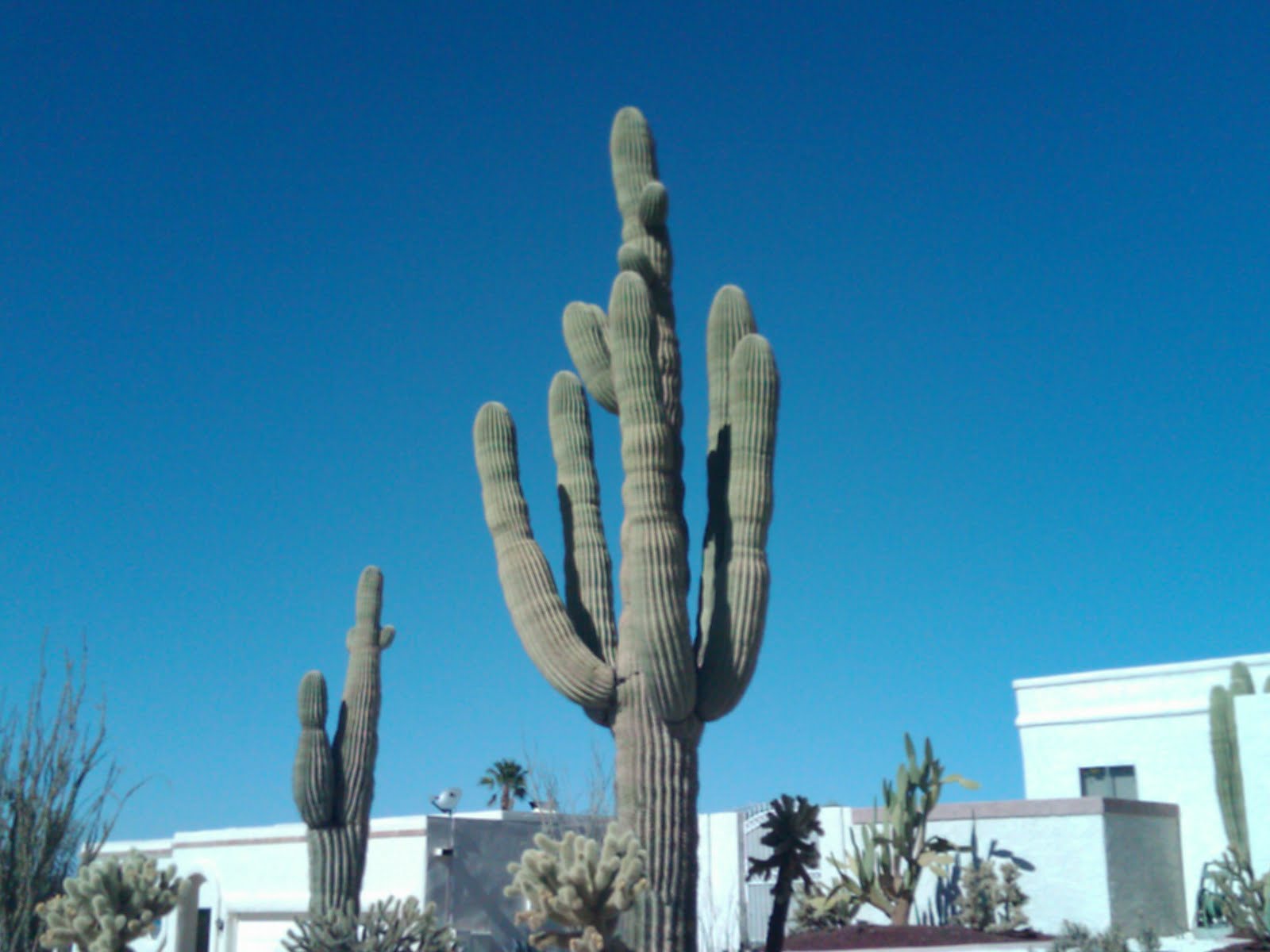
If you are passing through Las Vegas you may see a grand Saguaro cactus out of its native environment in southern Arizona and planted in someone's front yard.

If you happen to be in southern Utah just outside of Kanab you may see the Coral Pink Sand Dunes and the State Park with the same name. These dunes are formed from the colorful Navajo sandstone that is the predominant rock of the area. These dunes are famous for their beauty and for their appeal to the off road vehicle enthusiast.

Or you just may be stopping over at an outpost somewhere along a state line such as this little area called Border which sits in both Utah and Nevada along US 6 between Delta, Utah to the west and Ely, Nevada to the east.  Wherever the road takes you may you have a new adventure each time and enjoy what is around you.

Monday, July 12, 2010

Great Basin Summer


It is July here at the eastern edge of the Great Basin and the foot of the Wasatch Range of the Rocky Mountains.  Typically at this time of year from late June through August temperatures range in the 90 degree Farenheit range with about one to two weeks in the 100+ degree range possible.


Now sometimes I think of the Great Basin as a very boring type of desert.  The standard shrub is the sage brush. And mile after mile of the stuff can be very boring.  However there are some very pretty areas of this large basin if you know where to look.

At the northern end of the Great Basin is the Snake River Plain a large volcanic field with fertile soils that streches from Yellowstone National Park on the east to Oregon on the west. The above picture is a sunset near Ontario, Oregon.


While making a brief trip to Wyoming before the Independence Day weekend I took a shot of the new Welcome to Utah sign. Nice to see that the state finally has the idea that the 2002 Winter Olympics in Salt Lake City are finally done. The old signs depicting the games were up far too long. Looking across through the sign you can see the typical high basin and range topography that the Great Basin is famous for along with the endless sage.


This photo shot near my home is one of those "get that shot" moments. We get thunderstorms that come in the afternoon. This sunset just happened on the tail end of one of them. This is over Lehi, Utah.


I am not quite sure what type of flowers these are but they stand out against the brownish clay ground cover.

This is another typical Great Basin Shot. Across the sage and salt brush you can see green junipers covering the higher foothill. These junipers are the primary conifer over most of the basin and range desert.

A pair of small daisies growing up near a rock covered with lichens.

Opuntia polycantha or the Great Basin Prickly Pear flowering amongst the rocks and sage.


Fish Springs National Wildlife Refuge in western Juab County, Great Salt Lake Desert, Utah.

Mountain stream near Sundance, Utah.

Thistles can look pretty with their white flowers. Don't touch and I would not recommend for landscaping.

The Wasatch Range looking east from Eagle Mountain, Utah.

Sclerocactus glaucus in bloom.

Dry Creek in Highland, Utah. Not quite so dry as this is right before rain and high tempratures caused the creek to overflow its banks. Dry Creek orginates in Alpine, Utah in the Wasatch Range and empties into Utah Lake.

This is Utah Lake with the snow capped Wasatch Range in the background. As late as June the mountains are still capped with snow that will run off well into July before the highest peaks at 12,000 feet are completely snow free. Utah Lake is one of three large lakes in Utah left behind by ancient Lake Bonneville 10 to 15 thousand years ago.

The Great Basin for its size has many interesting areas to visit. It has one National Park, Great Basin National Park, extinct volcanic fields scattered across the eastern and central desert, caves, and sand dunes are all found within the Great Basin geographical area.  Late spring and early summer the desert comes to life only to become dry and brownish again by August.  

Deserts truly are magnificent places. Beauty can be found if only one looks beyond the dryness and heat to see what life makes its home in such a challenging environment.

Monday, May 24, 2010

Why Cactus?


Cactus have never really been my thing growing up. When I was seven we lived about 20 miles south of Salt Lake City, Utah in a mid size town called Sandy. We had large fields around our subdivisions of suburbia.

I would used to go out into these fields of sagebrush and play with my friends. One day while playing, I stumbled across a Great Basin Prickly Pear with long sharp spines. It was also colder that day and the barbs went right into my leg.

I ran home crying in a lot of pain and my mom got the barbs out with a pair of tweezers. I never really took to cactus after that. I mean they were cool as back drops in a Western and anywhere that I wasn't. But to be honest, pain was not my thing.

It was many years later that I met a friend of mine at my current work, who now lives in another state. He and I became fast friends. He let me come to his house and I saw this bizarre yard.

He had cacti, mostly prickly pear everywhere. He also had some palm trees. I thought to myself "This is an interesting chap." He was really enthusiastic about palms, cactus, and other tropical stuff. If it was a challenge to grow outside of the traditional zone, well Kirk was the man.

It soon became of some interest to me after a few trips we took out west of Utah Lake in Utah. Slowly he sucked me into his world and I began to grow prickly pears. The same kind of plant that stuck me in the leg some 25 years earlier.

The rest is history. That is how I came to love cacti. Now I have mini barrels, large barrels, golden barrels, beaver tails, prickly pear from the Colorado Plateau and Mojave Deserts, hedgehog cacti and chollas.

It is a wonderfest of pain but very beautiful when they bloom. I have always liked stuff that was a bit off the mainstream. I live on the line between the Great Basin to the west and the Rocky Mountains to the east.

It forms an interesting microclimate of moderate winters and hot summers with nice spring and fall seasons.

We have a true Indian Summer here. It is nice to see such hardy plants survive in and outside. More about cacti later. But if I figure if I am going to have a hobby, no pain, no gain.

Cactus Ring

Powered by WebRing.