Showing posts with label Mojave Desert. Show all posts

Saturday, September 18, 2010

From The Photo Album

Digging through the photo album on the computer I couldn't come up with a standard theme for this post. So I just figured that I would put up some desert photos and others that interest me.

To the left is a desert scape I took in West Valley City, Utah. In the photo are banana yucca, soap tree yucca, Joshua Tree, Mormon Tea among others. This person had the combination of various plants to make their yard look really good.

In Juab County, Utah out in the western Utah desert is an oasis called Fish Springs National Wildlife Refuge. Some 150 miles southwest of Salt Lake City this is truly the middle of no where.  What is more interesting is that there are people that actually live out in the sticks to manage this place.  There are no paved roads out in this area, only improved dirt roads.  If you have a road worthy machine then you are in luck.  The picture is at Fish Springs looking north toward Dugway Proving Grounds Military Area.


This is a Autumn shot up Diamond Fork Canyon in Utah County, Utah.  Looking south you can see the southern Wasatch Mountains.


The photo to the right is Quail Creek Reservoir, outside of St. George, Utah. This is a colorful area of Utah. I was grateful that the light was just right to capture this particular shot looking northeast. Here the blue waters
compliment the colorful red, orange, and brown rock of southwestern Utah's Mojave Desert.


This is another photo from Diamond Fork Canyon, Utah.  Looking toward the north you can see where the Wasatch Mountains of the Rockies meet the beginnings of the reddish colored mountain areas of the Colorado Plateau.


Nothing screams being in the middle of the desert like being in Las Vegas, Nevada.  In the older area of the strip is Fremont Street. A portion of this street has been covered by a large canopy with millions of LED lights.  I was able to get this one with my cell phone. It turned out pretty good. If you like lips then savor the moment.


Winter in northern Utah can be cold. And with cold comes frozen waterfalls. This picture is of Bridal Veil Falls near Provo, Utah.  The main part of the falls continue year round. The slower falls freeze up creating this beautiful type of cliff ice sculpture.


During the summer there is nothing like a Rocky Mountain Meadow shot. I took this one while roaming the back country of northern Utah. There is something nice about getting off the main trail and seeing what is beyond the horizon.


Sometimes getting the right sky meeting the hilltops makes for a great shot. This one is about 8,000 feet above sea level in the Utah Wasatch. The clouds were perfect on this day for a nice window into the moment.


This photo to the right I happened to capture right before the sunset. I thought these flowers growing in this large ornamental pot were a great shot. This is in downtown St. George, Utah.


Nothing says beauty like a prickly pear in bloom. This  opuntia from the Mojave Desert sits in my yard. This was taken summer 2010 when I had great results with the multiple cacti flowering.


The last photo shows the American Flag. I am always proud of my country and what America represents and the beauty of the land.

Wednesday, September 8, 2010

Zion National Park, Utah


Zion National Park in Southwest Utah is a wonder of nature. The name Zion comes from the Hebrew for "Sanctuary" or a holy place where one meets God.

Zion is a variety of climate zones surrounded by towering cliffs of color and majestic beauty. Carved by the Virgin River through the Colorado Plateau and Mojave Deserts, Zion truly is a wonder to behold.

To the right cottonwood trees line the Virgin River in Zion Canyon. The cottonwoods provide a habitat for wildlife and shade during the summer months when temperatures are often over 100 F for four months June through September.


The towering cliffs provide red, brown, and orange hues and their height leaving the observer wondering about the creation of nature and a Power higher than themselves who must be in charge of the grand scheme of this world and the universe.


Wildlife is abundant in the Park. This little chipmunk decided to pose for me while eating a seed or nut.


Moisture that seeps down from the snowfall of the cliff tops takes many years at times to make its way down through the rock to finally seep out through the Navajo Sandstone.

The results are literal hanging gardens. These plants that grow in moist microclimates throughout various areas of the park. Such sites as "Weeping Rock" provide some great scenery for Oases in the dry desert land.


The white tops of the cliffs show the beauty of nature and are less common than the reds and browns. These tops such as The Great White Throne suggest awe and majesty from the earliest inhabitants of the area, to the modern day tourist.


The conjunction of two deserts the Colorado Plateau and the Mojave Desert give the desert a variety of plant life. Prickly Pear, yucca, cholla, and other varieties of desert plants such as these juniper trees grow together in the park, whereas elsewhere they would be in totally different desert regions.


Volcanic rock shows that Zion's past has been anything but tranquil. Uplifts, advancing and receding seas, and of course ancient volcanic activity give the park its wide variety of geology from thousands to millions of years old.


These are some of the wonders of one of America's great national parks. Zion is in a desert, but offers so much more in nature, recreation, and reflection. It is a testament that miracles happen around us everyday.


Tuesday, August 31, 2010

The Wide Open Road


Sometimes life is just about taking to the road and seeing where the road will take you.  The desert road trip can be different in many ways.  Sometimes the paved road gives way to the dirt road. And the dirt road takes you off the beaten path.  There is always something special about hitting the road in the desert.

During the spring in the Mojave you just might find the greatest of all yucca, the Joshua Tree in bloom. The long stocks of off white flowers reach toward the sky. At night the yucca moths pollinate the yucca flower enabling the plant to fruit.

The off beaten path may lead you to bizarre rock formations such as this one in the Mojave. Colors of red, orange hues contrast against the chocolate brown mountains in the distance.

In the Autumn you may find yourself looking at the changing colors of groves of trees preparing for the long winter against the high mountain peaks of the Rockies that form the boundaries of the Great Basin, Colorado Plateau, and Chihuahuan Deserts.

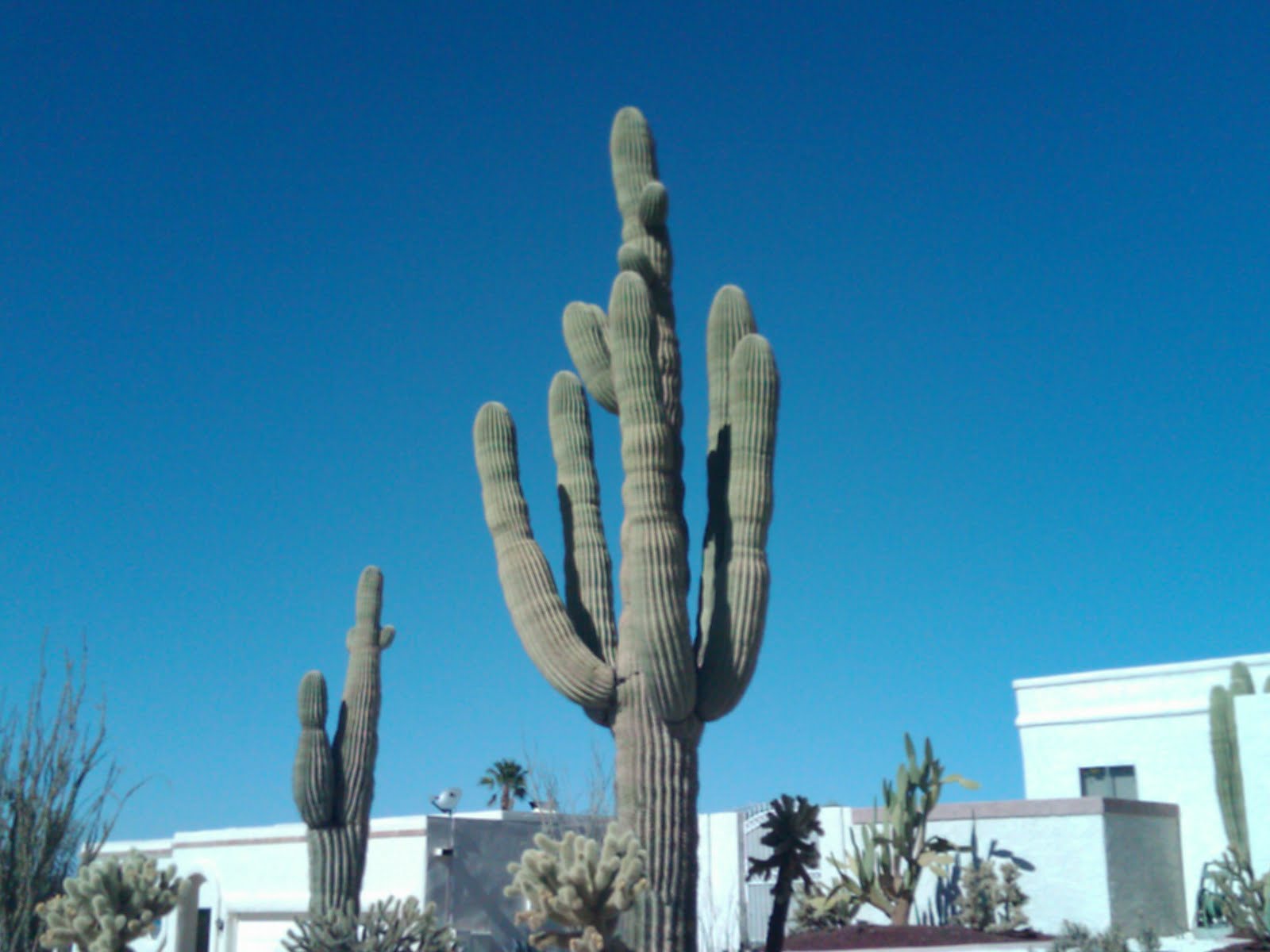
If you are passing through Las Vegas you may see a grand Saguaro cactus out of its native environment in southern Arizona and planted in someone's front yard.

If you happen to be in southern Utah just outside of Kanab you may see the Coral Pink Sand Dunes and the State Park with the same name. These dunes are formed from the colorful Navajo sandstone that is the predominant rock of the area. These dunes are famous for their beauty and for their appeal to the off road vehicle enthusiast.

Or you just may be stopping over at an outpost somewhere along a state line such as this little area called Border which sits in both Utah and Nevada along US 6 between Delta, Utah to the west and Ely, Nevada to the east.  Wherever the road takes you may you have a new adventure each time and enjoy what is around you.

Saturday, August 14, 2010

Never Allow Dave and Kirk On A Road Trip


When Kirk and I go on road trips we can be hazardous to the public.  Kirk is more mellow and reserved. I am just whacked out. Put us together and we are hell on caffeine.  Kirk is a nice guy and then I come around and he becomes a different creature from those who claim to know him as the nice guy at the government.  Kirk showed me this palm at Wal-Mart. This is a needle palm. Found it for $20.  It now sits in my yard. Thanks buddy. It was his passive aggressive behavior that led me to by this one.

This next photo I could not bring over so I linked to it. When we stopped in Green River, Utah we caught this dude filling up his plane at a gas station.  He said he was from Eagle Mountain, Utah. What ever floats your boat.


To the left is the Gieco Gecko or something like that. Kirk had to get a shot of this lizard while I wanted to run naked through the brush of the Book Cliffs.  Of course with not willing to put up with my antics Kirk took this photo and threatened to leave me behind. Fine, whatever dude!

Kirk always wanted his photo taken somewhere cool. When we were at Antelope Island in Utah we went into this old ranch house. Kirk thought that he would look bitchin next to this old phonograph. Now I admit this is not exactly a desert photo at first glance.  But it was taken inside an old shack in the desert so don't give me any grief. Note the camouflage fatigues don't go with the coat.

Now some people do not believe that me and Kirk are actually environmentally friendly. This is not true. It is true that I like fossil fuels burning amass producing electricity.  Kirk, I am not sure what he actually likes to see mechanical wise, but I digress.  In this link you can see us actually hugging a tree. It is a beautiful trunk isn't it. The dude couldn't get his damn finger out of the way ruining the true effect. I tried to get Kirk to hug me, but he declined. No sense of humor!

This again is at Antelope Island. Notice the green bog in
to the right. This bog was still nice and green well into November 2009. Now if you don't think that we don't just stumble across the most beautiful places on earth then you have no sense of imagination and you don't know Kirk and Yours Truly.  We both agreed that a swim in the bog was not on the adventure agenda for the day.


The Mojave Desert brings the best out in both of us. On this trip we were in Moapa, Nevada in an area known as Warm Springs.  Kirk thought that road trip means taking a picture of the road.  Ansel Adams he is not, but I have to give him credit for actually capturing some palms on either side of the road.


This lovely rock formation is at the Garden of the Gods outside of Colorado Springs, Colorado. Kirk had us hiking all over this place. He took a while finding it too. Nonetheless I got this lovely photo.  Kirk insisted that blistered our feet were we hike on.  I screamed abuse, but nobody listened. His girls just laughed at me and my teenage son refused to admit he had a father.

Finally, to end this lovely entry when I went out to Colorado last year Kirk showed us Cherry Hill State Park which is an earlier entry in this blog of ours.  But I thought it fitting to let you all know that the place is full of plains yucca.  Plains yucca go from the Front Range of the Rockies east to the boring land of the Midwest US.  At least there is something that is yucca in this post.  Had I not lost my photos of Bennett, Colorado I would have included them, but my computer crashed and the Garden of the Gods one was one of the few that I had left.

Now I wish I had more time to give you the lowdown on the odd couple relationship that Kirk and I have on road trips.  On one trip back from St. George, Utah a thunderstorm came in around Beaver, Utah. I screamed "Run for your life! Hurricane! Its the Apocalypse!" One mother and her kids got the hell out of there, Kirk nearly fainted, and I am not sure what came over me, but I am sure it was the adrenalin rush of caffeine.

Sunday, August 8, 2010

Snow Canyon State Park, Utah


Snow Canyon State Park in southwestern Utah is one of my favorite haunts. This may be one of  the great desert state parks around.  Snow Canyon sits on the intersection of where the Great Basin, Colorado Plateau, and Mojave Desert all meet.  You get an ecosystem here that blends all three deserts into one habitat.

The Park is part of a geologic oddity with volcanic activity that is only a few thousand years old, Navajo Sandstone cliffs and folds, lava fields, lava boulders, extinct shield volcanoes and dunes. The picture above is of a petrified dune.  If you look at the plants in the picture you can see Teddy Bear Cholla growing alongside juniper trees, sagebrush, and mesquite.

These large boulders are part of an older volcanic field. The orange, brown and reddish hues blend together with the with the blue green shrubbery to make the views interesting at each stop.
This is a shield volcano cone that is extinct. Try hiking the thing. It will give you a good workout to reach the almost straight up summit.

My final shot is one of my favorite that I have ever taken. It shows the contortions of the cliffs, the color of the area.  In the foreground you can see the remains of a broken up lava flow. It would have been cool to be here when the area was more geologically active.  Who knows, I might get my wish sometime.

Monday, June 21, 2010

Valley of Fire State Park, Nevada

Off of Interstate 15 in the middle of the Mojave Desert is the Valley of Fire State Park. This Park is one of the many beautiful place that can be found in the Mojave Desert. One of the Park's main attractions are its various odd rock formations.
Unlike other areas of the Mojave where the predominant colors are brown based, Valley of Fire has very reddish hues, and thus the name.

Many years ago the ancestors of are now known as the Paiute and Moapa Indian tribes lived in canyons and among the formations. Various types of animals that lived here can be seen in the petroglyphs that line various rock faces in the Park. Also the petroglyphs served as a "road map" and "learning center" for the people that lived there. Clearly recognizable animals and plants mix with designs and almost writing type symbolism.

Some people believe that the ancient Indian inhabitants made these pictures in rock faces for art or ceremonious purposes.  I think they were more informational that ceremonial. They appear in high easy to see places that would have told the "reader" important information he or she needed to know about hunting, gathering, agriculture, direction, and possibly safety from any aggressive neighbors in the area.

Among the various areas of the Park to explore are what are called "slot canyons." These canyons are made by flash flooding, wind, and other natural forces of erosion. Outlaws of the area were noted for using the slot canyons just as the ancient peoples did, to hide from the law and provide a safe haven until the heat was off.

If you need a temporary place to cool down the Park is full of these crevices in the canyon walls. They are really great places in order to hide or if deep enough explore. Just use caution as there are potentials for flash floods and falling rock.
The way that the light plays off of the rock formations can create some interesting photo opportunities.
Some formations are actually petrified sand dunes that make great areas to hike on. Just be careful. What appears smooth may not be so much.

The orange fire color for which the Park gets its name. Someone has left their mark. Vandalism now and in 1000 years protected artifact go figure. Maybe aliens were here?
This rock formation shows the continued variety of shapes the stone takes in the Park.

A balancing rock. How long will this particular boulder be able to hold on?

The plants of the Mojave help add to the beauty of the park. They compliment these rock formations and represent many of the flora and fauna of the park. Many differing types of mesquite, cacti, yucca, and shrubbery add variety to the biodiversity of the park.
When you get a chance go and see Valley of Fire State Park on a Las Vegas Trip. You may just save some money and see some better attractions than some of the characters that hand out pamphlets on The Strip.

Cactus Ring

Powered by WebRing.