Thursday, June 17, 2010

Cold Hardy Cacti

Live in a colder environment and want the joy of growing cacti outdoors? There are many varieties of cold hardy cacti that are accustomed to the harsh conditions of winter as well as the hot dry summers.
The Prickly Pear comes in numerous species. The one from the Mojave Desert is an excellent example of a cold hardy cactus.

This is a Hedgehog cactus or Clare Cup cactus. I have posted the photo before, but this specimen native to the Great Basin and Colorado Plateau is an excellent candidate for cultivation.
This is a picture of Wright's Fishhook Cactus. These species are found in areas of Eastern Utah and Colorado.  It is cold hardy but also endangered so check with local officials before getting one from the wild. It is also possible to cultivate from seed, though challenging.

This Barrel Cactus is from the Mojave Desert and can also be grown from seed. It is a slow growing plant and can get as tall as six feet.  Generally barrel cacti bloom at the crown for a short time and then the flowers dry into fruits that contain seeds. These may not bloom each summer, but do usually each year.

Again check with local authorities on this species. This cactus may need a bit more protection than planting in the open depending on where you live. Always check for fungus when this cactus comes out of dormancy and use a common shrub fungicide. Remove any winter rot or diseased areas if necessary. Generally though it will tough out most winters in the dry areas of the Western United States.

And finally this is my cholla. Cholla cacti are found in all the deserts of the West. This cholla was rescued from a fire. It may be a Walking Stick variety, but I could be wrong. Cholla from the western plains, Mojave Desert and lower Great Basin should survive unprotected. When in a garden though they need to be cut back frequently as pads grow fast and if not groomed properly as a shrub, they can grow out of control.

Monday, June 14, 2010

Utah's Northern "Zone 8?"


There is an area west of Salt Lake City in West Valley City, Utah.  West Valley is located about 5 miles away from the south end of the Great Salt Lake.  The Great Salt Lake is eight times saltier on average than the ocean.

Salt Water freezes at a lower temperature than fresh water. During the winter areas around such bodies of water create an area that may be one half to one zone in temperature higher as based on the USDA Hardiness Zones, the map that shows what plants do best in what climates.  It is based on average minimum annual temperatures.

What is interesting is that Joshua Trees grow very well in this area as compared to other areas well outside their range.  West Valley City is typically a zone 7, but could the area nearest the Great Salt Lake be closer to a zone 8?  Here are some pictures I have taken of several types of yucca that seem to thrive here better than other areas of the Salt Lake Valley.


                  This above photo is of Yucca Bacata also known as a Spanish Dagger beginning to bloom.


                                    A young Joshua Tree planted in a zero scaped curb setting.


Two small yuccas growing on a curb.


Below is a landscape of various yucca species and cacti.

Sunday, June 13, 2010

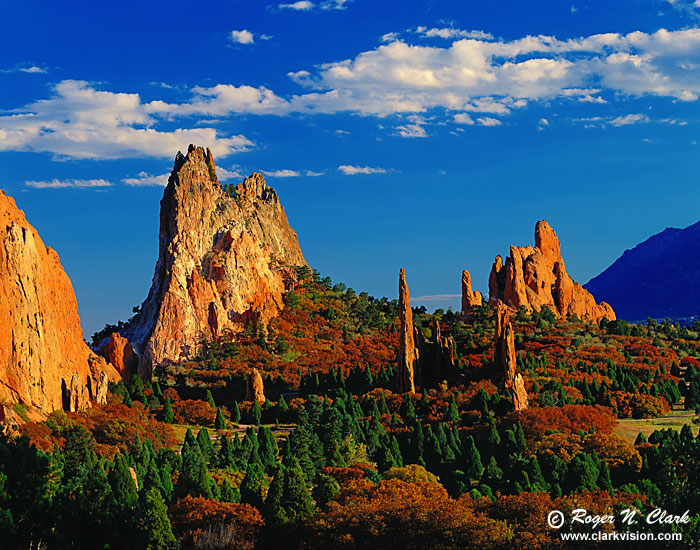
Garden of the Gods!!

I went as far as Pueblo, Colorado today. I saw something that blew my mind - between Pueblo and Colorado Springs, there are chollas everywhere. Some of them are as massive as small trees. I haven't seen anything like that outside of the Mojave Desert.  Anyway, this is a sample, but I was unfortunately unable to snap a shot of any of the big tree - chollas.

Garden of the gods yuccas

Garden of the Gods visit

I went for a hike today in Garden of the Gods. Awesome place! It reminds me of Moab. There are so many yuccas, cacti everywhere....and....deer!  I literally almost ran into this deer. There were actually two.  One of them happily posed for the picture. I don't think I've ever been this close to a deer before...(not counting the zoo!)

Wednesday, June 9, 2010

Antelope Island State Park, Utah

Out in the Great Salt Lake is an area of the Great Basin that is not quite like the typical sagebrush, juniper covered basin and range.  Antelope Island State Park, Utah is one true place of beauty and oddities.

The island is reached through the Great Salt Lake via a causeway from Syracuse, Utah about 20 miles north of Salt Lake City.

Once you get to the island one of the first things to see is the bison herd. One of the Wests "free roaming" herds of about 600 to 1000 bison call the mountain island home. They can be found throughout the island grazing in alone or in small herds.

From Antelope Island you can see the vast expanse   of the Great Salt Lake in all directions. Off in the distance are the Wasatch Mountains a sub range of the Rockies.

Antelope Island has been used by various people for thousands of years. First, American Indians utilized the island for game and fresh water from the natural springs that come out of various places throughout the island.

When the Mormons arrived in 1847 they soon to began to have an impact.  The island was used for ranching for many years.  

One ranch remains on the south end of the island and is maintained by the State of Utah.  The ranch has an old ranch house, a barn with artifacts of early 20th Century ranching life, a picnic area, and plenty of areas for exploration.

Antelope Island was turned over the The State of Utah in the early 1980s. Surrounded by the Great Salt Lake the island maintains a unique desert environment.  Sometimes though in drought years the island can be reached by land as the lake has dried up enough to actually make the island a peninsula, a mass of land surrounded on three sides by water.

The island derives its name from herds of Pronghorn, which are of the sheep family, but not true antelope. They live on the island along side the buffalo.  The bison are not native to the island but were introduced by concerned conservationists about the mass slaughter of the plains bison that occurred in the 19th Century.

The herd has been maintained ever since by both private and now Utah State. Each year the bison are rounded up and herded into a corral area on the north of the island for immunization, the sale of excess animals to public and private interests, and to individuals for slaughter. This is done because the ecosystem of the island can only sustain a certain number of buffalo at any given time and also to keep the genetic stock fresh.

The topography of the island is wetlands near the Great Salt Lake, plains and foothills ascending toward the mountain peak.  A variety of microclimates exist on the island due to the Great Salt Lake moderating the weather of an otherwise hot summer and cold winter.

Antelope Island is truly a desert within a desert. Its unique isolation, its moderated climate, its topography from rock outcroppings to dunes on the northeast give the island a variety of landscapes unique to areas of the Great Basin.

The beauty of the desert is that things are not always what they seem. A desert can be hot in the summer, cold in the winter, have varying degrees of climate and wildlife.

The top predators on the island are probably the bobcat and the coyote, though some do suspect cougar may be present.

Lake Bonneville receded thousands of years ago leaving behind the Great Salt Lake and a basin and range type of province.  The eastern Great Basin has more temperate climate than the central Great Basin due to the  Wasatch Mountains and their weather regulation.  Antelope Island takes that a step further by extending the non frost season longer than other areas around the Wasatch Mountain Range.

I hope to go back and camp in the dunes again like I did as a child. This is one place to get away from civilization and still be able to see it or get to it across the Great Salt Lake. Antelope Island is truly worth exploring for the desert enthusiast.

Cactus Ring

Powered by WebRing.